01
Ran a pilot that stalled?
That's exactly where we start. We examine why it stalled: the data, the integration, the governance, the adoption. You get a scoped path to operation, or an honest recommendation to stop.
YOU DECIDE WHERE TO START, IN WEEKS
You leave with a prioritised plan your leadership team can decide on: where AI creates real value in your operation, and what it takes to get it there. Fixed scope and fixed price, agreed before we start. Two ways in: you ran a pilot that stalled, or you haven't started yet.
WHERE YOU STAND TODAY
That's exactly where we start. We examine why it stalled: the data, the integration, the governance, the adoption. You get a scoped path to operation, or an honest recommendation to stop.
AI has been on the agenda for a year, but nothing has reached operation. We map the ground: where the value sits in your workflows, what your data and systems can carry, and the first moves worth making.
WHO IT'S FOR
The assessment is built for organisations where AI decisions carry weight: the Nordic unit of an international group, a public agency or member organisation, an established company where the question is no longer whether to use AI but where to start and what to avoid.
You may already have a strategy deck from group headquarters. What you need is a plan for your own operation, grounded in your data, your regulation and your people.
SIX DELIVERABLES, ALL YOURS
Ranked by business value, feasibility, risk and investment, with the reasoning visible, not just the ranking.
Data sources, model choice (open or closed), integration needs, security requirements.
So what you build is compliant by design, not audited after.
Presented in the terms your finance function already uses.
Presented to your leadership team, with owners, milestones and decision points.
The analysis, the underlying data, the plan. And the plan is written so that any competent partner can execute it. Including one that isn't us.
FOUR STEPS IN ORDER
Responsible AI is not a separate line item. Data handling, model choice, risk classification and GDPR coordination are built into every phase, so nothing needs to be retrofitted.
We read your operation: systems, data, regulatory position. And we measure where the organisation actually stands, across functions and not only at the top, on what your own people report about their own work.
A working session with your leadership team where use cases are ranked by value, feasibility, risk profile and investment need. Some candidates die here. That's the point.
For the prioritised cases: what data they need, which model type fits, how they integrate with what you already run, and what the EU AI Act requires of them.
An action plan with owners, milestones and decision points, presented to the leadership team. Then the decision is yours.
THE METHOD DIFFERENCE
Direction and governance are decided in the leadership team, and that is where we work. But a plan built only on what management believes about its own AI readiness is a plan that stalls. So we also measure.
In every assessment that measurement reaches the whole organisation, and we follow the work to where the friction actually sits. The insight that decides whether an initiative survives contact with reality usually sits below the leadership team, with the people who do the work.
Practical ability sits below what leadership assumes, so the plan leads with practice.
Real uncertainty about what data may go into which tool, so the plan draws that line first.
High motivation with no route to act on it, so the plan gives the first step an owner.
WHAT WE PROMISE AND DON'T
Agreed before we start. If it takes us longer, that is our cost, not yours.
We won't quote a percentage before we've seen your data. A supplier who does is selling a story, not a diagnosis.
We don't resell technology and we earn nothing from your model choice. If the honest answer is to hold off, that is the answer you get.
The analysis, the underlying data, the plan. Use it with us, with another partner, or on your own.
The assessment is typically scoped to be procurable by direct award.
AFTER THE ASSESSMENT
The assessment stands on its own. Many clients continue with us into implementation, delivered under a Build-Operate-Transfer model: we build, we see it into operation, and we transfer ownership to you. But that is a separate decision, made with the plan in hand. There is no bundled continuation and no retainer required.
PROOF
We have delivered AI assessments and pre-studies for Arbetsgivarverket and Trygghetsstiftelsen, and AI strategy and PoC analysis for CWS Sweden. The senior accountable for those engagements is the senior accountable for yours.
QUESTIONS
An AI readiness assessment is a fixed-price diagnosis of where AI creates real value in your operation, and it is measured in weeks, not quarters. The work runs in four steps: baseline, prioritisation, requirements and design, and a decision basis presented to your leadership team. You leave with a prioritised use-case portfolio and an action plan carrying owners and milestones. We have delivered assessments in this format for Arbetsgivarverket and Trygghetsstiftelsen.
AI readiness is how ready an organisation actually is to run AI in daily operation: what the data carries, what the systems can take, what the regulation requires, and what people are able to do. We measure it across functions and not only in the leadership team, because a plan built on what management believes about its own AI readiness is a plan that stalls. The measurement is the first step of an AI readiness assessment, and it is what decides where the plan begins.
An AI readiness assessment is delivered at a fixed price for a fixed scope, quoted after a short scoping call where we agree what is included. If the work takes us longer than planned, that is our cost, not yours. We promise no return before we have seen your data. For public-sector organisations the assessment is normally scoped to be procurable by direct award under the Swedish Public Procurement Act.
An AI readiness assessment needs three things from you: a leadership sponsor, access to the people who do the work, and an overview of your systems and data. We handle the rest. What we measure reaches across functions, not only the top, and it covers how AI-literate people judge themselves to be. That matters because the AI literacy duty in Article 4 of the EU AI Act has applied since 2 February 2025.
No, your data does not need to be in order before an AI readiness assessment starts. Finding out what it can and cannot carry is part of the work. In the requirements and design step we go through which data sources the prioritised use cases need, and what may be shared with which tools. The Swedish Authority for Privacy Protection supervises AI that processes personal data, so that line is drawn against the GDPR here, not later.
Yes, a risk assessment under the EU AI Act is part of every AI readiness assessment, coordinated with the GDPR. We classify the prioritised use cases against the regulation's risk categories and write the documentation into the action plan. The transparency duties in Article 50 apply from 2 August 2026 and the Annex III high-risk duties from 2 December 2027, so the assessment is made against concrete dates.
Sometimes an AI readiness assessment can save a stalled pilot, and sometimes the honest answer is to shut it down and move the budget. We start with why it stalled: data, integration, governance or adoption. If the pilot generates content or interacts with people, the transparency duties in Article 50 of the EU AI Act also weigh in, since they apply from 2 August 2026. You get either a scoped path to operation or a recommendation to stop, with the reasons.
INSIGHTS
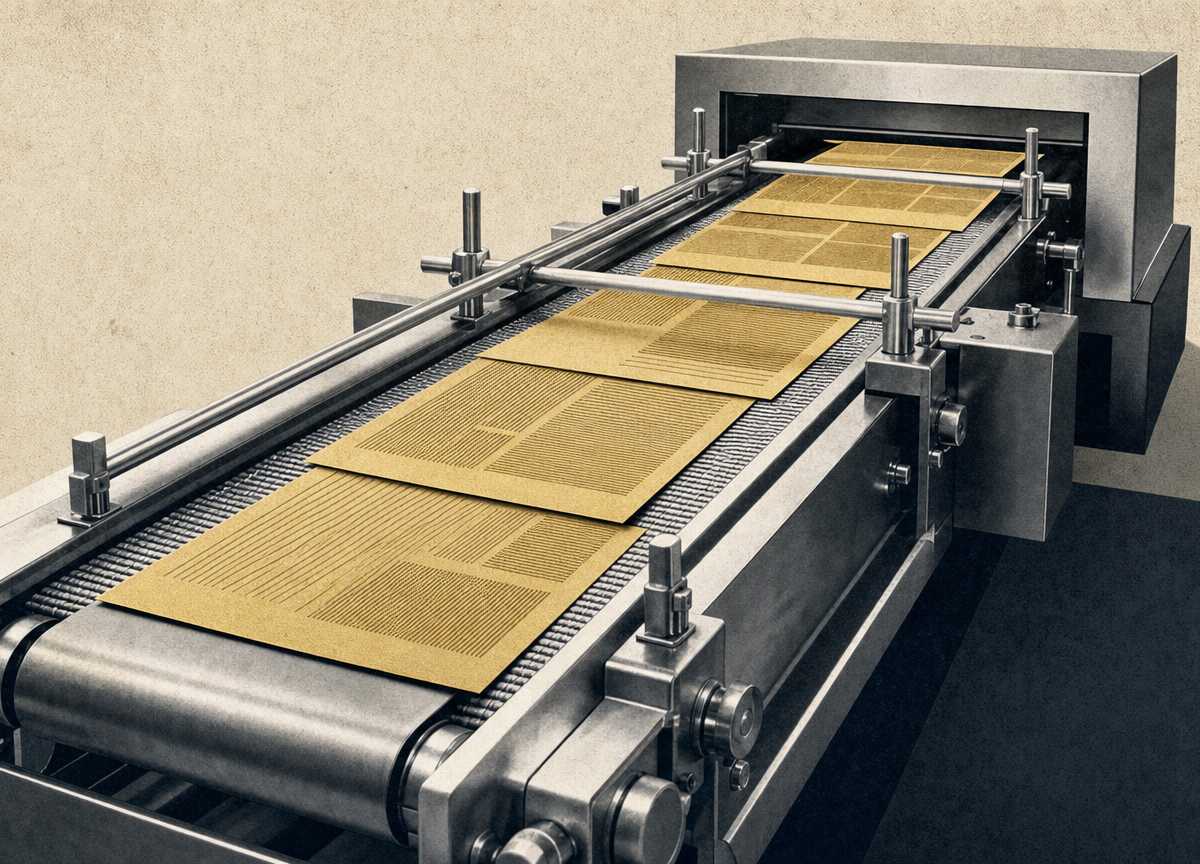
The share of Swedish food producers using at least one AI technology went from 4.71 to 21.39 percent in two years. The share using AI for production processes fell over the same period, and that decides what the sector figure is worth to you.
Read the analysis
More than half of employees say they conceal their AI use. That turns every figure built on asking into a floor rather than a level, and it is the whole difference between a diagnosis and a score.
Read the analysis